<?xml version="1.0" encoding="utf-8"?><feed xmlns="http://www.w3.org/2005/Atom" xml:lang="en"><generator uri="https://jekyllrb.com/" version="4.3.4">Jekyll</generator><link href="https://www.esp.cs.columbia.edu/feed.xml" rel="self" type="application/atom+xml" /><link href="https://www.esp.cs.columbia.edu/" rel="alternate" type="text/html" hreflang="en" /><updated>2026-08-30T20:34:07-04:00</updated><id>https://www.esp.cs.columbia.edu/feed.xml</id><title type="html">ESP — Open-Source SoC Platform</title><subtitle>ESP is an open-source research platform for designing heterogeneous systems-on-chip, integrating accelerators, and prototyping complete systems on FPGA.</subtitle><entry><title type="html">Release 2026.1.0</title><link href="https://www.esp.cs.columbia.edu/2026/03/25/release2026-1-0/" rel="alternate" type="text/html" title="Release 2026.1.0" /><published>2026-03-25T00:00:00-04:00</published><updated>2026-03-25T00:00:00-04:00</updated><id>https://www.esp.cs.columbia.edu/2026/03/25/release2026-1-0</id><content type="html" xml:base="https://www.esp.cs.columbia.edu/2026/03/25/release2026-1-0/"><![CDATA[<p>ESP <a href="https://github.com/sld-columbia/esp/releases/tag/2026.1.0">2026.1.0</a>
is now available.</p>

<p>This release moves main-memory access from AHB to AXI, improves AXI-to-NoC
burst transfers, makes the FPGA memory-link width configurable, and enables two
memory tiles on VCU118. It also refreshes the SoC configuration GUI, updates
the Catapult SystemC flow and ASIC build infrastructure, expands AXI support
across the supported FPGA boards, and includes a collection of architecture,
software, and build fixes.</p>

<p>See the <a href="https://github.com/sld-columbia/esp/releases/tag/2026.1.0">official release
notes</a> for the full
list of changes.</p>]]></content><author><name>Biruk Seyoum</name></author><category term="ESP" /><category term="SLD" /><category term="open-source" /><category term="OSH" /><category term="open-source-hardware" /><category term="accelerators" /><category term="SoC" /><category term="RISC-V" /><category term="GitHub" /><category term="release" /><summary type="html"><![CDATA[ESP 2026.1.0 is now available.]]></summary><media:thumbnail xmlns:media="http://search.yahoo.com/mrss/" url="https://www.esp.cs.columbia.edu/esp-logo.png" /><media:content medium="image" url="https://www.esp.cs.columbia.edu/esp-logo.png" xmlns:media="http://search.yahoo.com/mrss/" /></entry><entry><title type="html">Release 2025.1.0</title><link href="https://www.esp.cs.columbia.edu/2025/01/03/release2025-1-0/" rel="alternate" type="text/html" title="Release 2025.1.0" /><published>2025-01-03T00:00:00-05:00</published><updated>2025-01-03T00:00:00-05:00</updated><id>https://www.esp.cs.columbia.edu/2025/01/03/release2025-1-0</id><content type="html" xml:base="https://www.esp.cs.columbia.edu/2025/01/03/release2025-1-0/"><![CDATA[<p>A new GitHub Release <a href="https://github.com/sld-columbia/esp/releases/tag/2025.1.0">2025.1.0</a> of ESP is now available.</p>

<p>Check out the release notes for the complete list of new ESP features.</p>]]></content><author><name>Joseph Zuckerman</name></author><category term="ESP" /><category term="SLD" /><category term="open-source" /><category term="OSH" /><category term="open-source-hardware" /><category term="accelerators" /><category term="SoC" /><category term="RISC-V" /><category term="GitHub" /><category term="release" /><summary type="html"><![CDATA[A new GitHub Release 2025.1.0 of ESP is now available.]]></summary><media:thumbnail xmlns:media="http://search.yahoo.com/mrss/" url="https://www.esp.cs.columbia.edu/esp-logo.png" /><media:content medium="image" url="https://www.esp.cs.columbia.edu/esp-logo.png" xmlns:media="http://search.yahoo.com/mrss/" /></entry><entry><title type="html">ESP at ISSCC!</title><link href="https://www.esp.cs.columbia.edu/2024/03/16/ESP_chip_EPOCHS1/" rel="alternate" type="text/html" title="ESP at ISSCC!" /><published>2024-03-16T00:00:00-04:00</published><updated>2024-03-16T00:00:00-04:00</updated><id>https://www.esp.cs.columbia.edu/2024/03/16/ESP_chip_EPOCHS1</id><content type="html" xml:base="https://www.esp.cs.columbia.edu/2024/03/16/ESP_chip_EPOCHS1/"><![CDATA[<p>Check out our second chip based on ESP, the open-source SoC platform.</p>

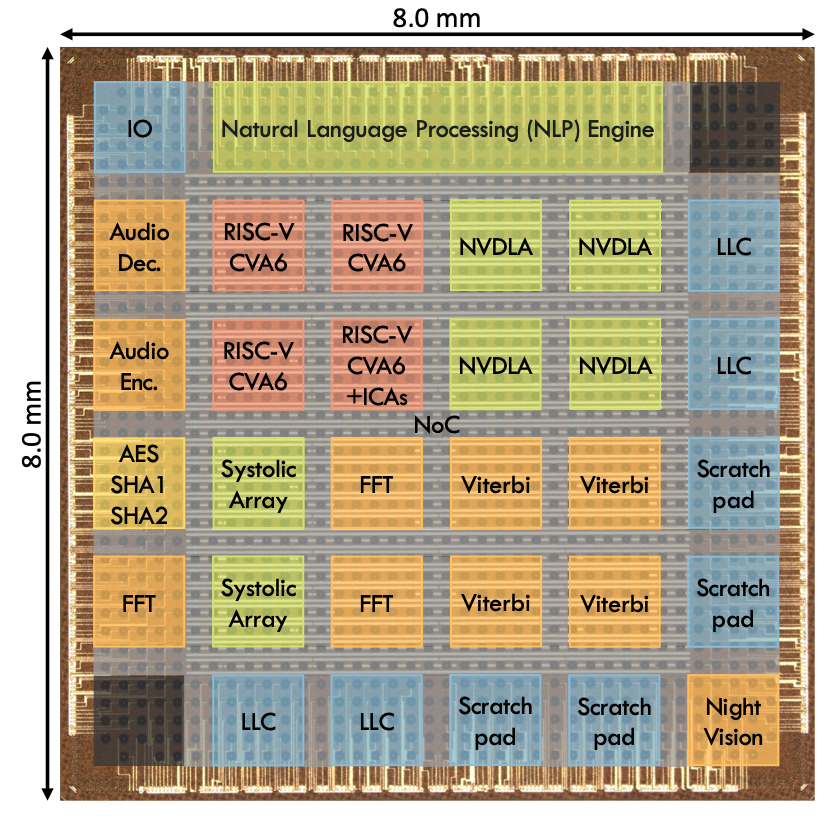
<p><img src="/images/EPOCHS1.png" alt="EPOCHS1 chip" title="EPOCHS1" height="611px" width="513px" /></p>

<p>The chip features multiple Linux-capable RISC-V cores, 14 different types of accelerators, and novel power management techniques.</p>

<p>This work is a collaboration with Harvard, IBM Research, and University of Illinois and was recently <a href="https://ieeexplore.ieee.org/document/10454572">published</a> at ISSCC 2024.</p>]]></content><author><name>Maico Cassel dos Santos</name></author><category term="ESP" /><category term="SLD" /><category term="open-source" /><category term="OSH" /><category term="open-source-hardware" /><category term="accelerators" /><category term="SoC" /><category term="RISC-V" /><category term="ISSCC" /><summary type="html"><![CDATA[Check out our second chip based on ESP, the open-source SoC platform.]]></summary><media:thumbnail xmlns:media="http://search.yahoo.com/mrss/" url="https://www.esp.cs.columbia.edu/EPOCHS1.png" /><media:content medium="image" url="https://www.esp.cs.columbia.edu/EPOCHS1.png" xmlns:media="http://search.yahoo.com/mrss/" /></entry><entry><title type="html">Release 2024.1.0</title><link href="https://www.esp.cs.columbia.edu/2024/03/15/release2024-1-0/" rel="alternate" type="text/html" title="Release 2024.1.0" /><published>2024-03-15T00:00:00-04:00</published><updated>2024-03-15T00:00:00-04:00</updated><id>https://www.esp.cs.columbia.edu/2024/03/15/release2024-1-0</id><content type="html" xml:base="https://www.esp.cs.columbia.edu/2024/03/15/release2024-1-0/"><![CDATA[<p>A new GitHub Release <a href="https://github.com/sld-columbia/esp/releases/tag/2024.1.0">2024.1.0</a> of ESP is now available.</p>

<p>Check out the release notes for the complete list of new ESP features.</p>]]></content><author><name>Joseph Zuckerman</name></author><category term="ESP" /><category term="SLD" /><category term="open-source" /><category term="OSH" /><category term="open-source-hardware" /><category term="accelerators" /><category term="SoC" /><category term="RISC-V" /><category term="GitHub" /><category term="release" /><summary type="html"><![CDATA[A new GitHub Release 2024.1.0 of ESP is now available.]]></summary><media:thumbnail xmlns:media="http://search.yahoo.com/mrss/" url="https://www.esp.cs.columbia.edu/esp-logo.png" /><media:content medium="image" url="https://www.esp.cs.columbia.edu/esp-logo.png" xmlns:media="http://search.yahoo.com/mrss/" /></entry><entry><title type="html">Release 2023.1.0</title><link href="https://www.esp.cs.columbia.edu/2023/02/03/release2023-1-0/" rel="alternate" type="text/html" title="Release 2023.1.0" /><published>2023-02-03T00:00:00-05:00</published><updated>2023-02-03T00:00:00-05:00</updated><id>https://www.esp.cs.columbia.edu/2023/02/03/release2023-1-0</id><content type="html" xml:base="https://www.esp.cs.columbia.edu/2023/02/03/release2023-1-0/"><![CDATA[<p>A new GitHub Release <a href="https://github.com/sld-columbia/esp/releases/tag/2023.1.0">2023.1.0</a> of ESP is now available.</p>

<p>Check out the release notes for the complete list of new ESP features.</p>]]></content><author><name>Gabriele Tombesi</name></author><category term="ESP" /><category term="SLD" /><category term="open-source" /><category term="OSH" /><category term="open-source-hardware" /><category term="accelerators" /><category term="SoC" /><category term="RISC-V" /><category term="GitHub" /><category term="release" /><summary type="html"><![CDATA[A new GitHub Release 2023.1.0 of ESP is now available.]]></summary><media:thumbnail xmlns:media="http://search.yahoo.com/mrss/" url="https://www.esp.cs.columbia.edu/esp-logo.png" /><media:content medium="image" url="https://www.esp.cs.columbia.edu/esp-logo.png" xmlns:media="http://search.yahoo.com/mrss/" /></entry><entry><title type="html">ESP is silicon-proven!</title><link href="https://www.esp.cs.columbia.edu/2022/09/26/ESP_chip_EPOCHS0/" rel="alternate" type="text/html" title="ESP is silicon-proven!" /><published>2022-09-26T00:00:00-04:00</published><updated>2022-09-26T00:00:00-04:00</updated><id>https://www.esp.cs.columbia.edu/2022/09/26/ESP_chip_EPOCHS0</id><content type="html" xml:base="https://www.esp.cs.columbia.edu/2022/09/26/ESP_chip_EPOCHS0/"><![CDATA[<p>Check out the <a href="https://sld.cs.columbia.edu/pubs/jia_mantovani_casseldossantos_esscirc22.pdf">first chip</a> based on the ESP platform.</p>

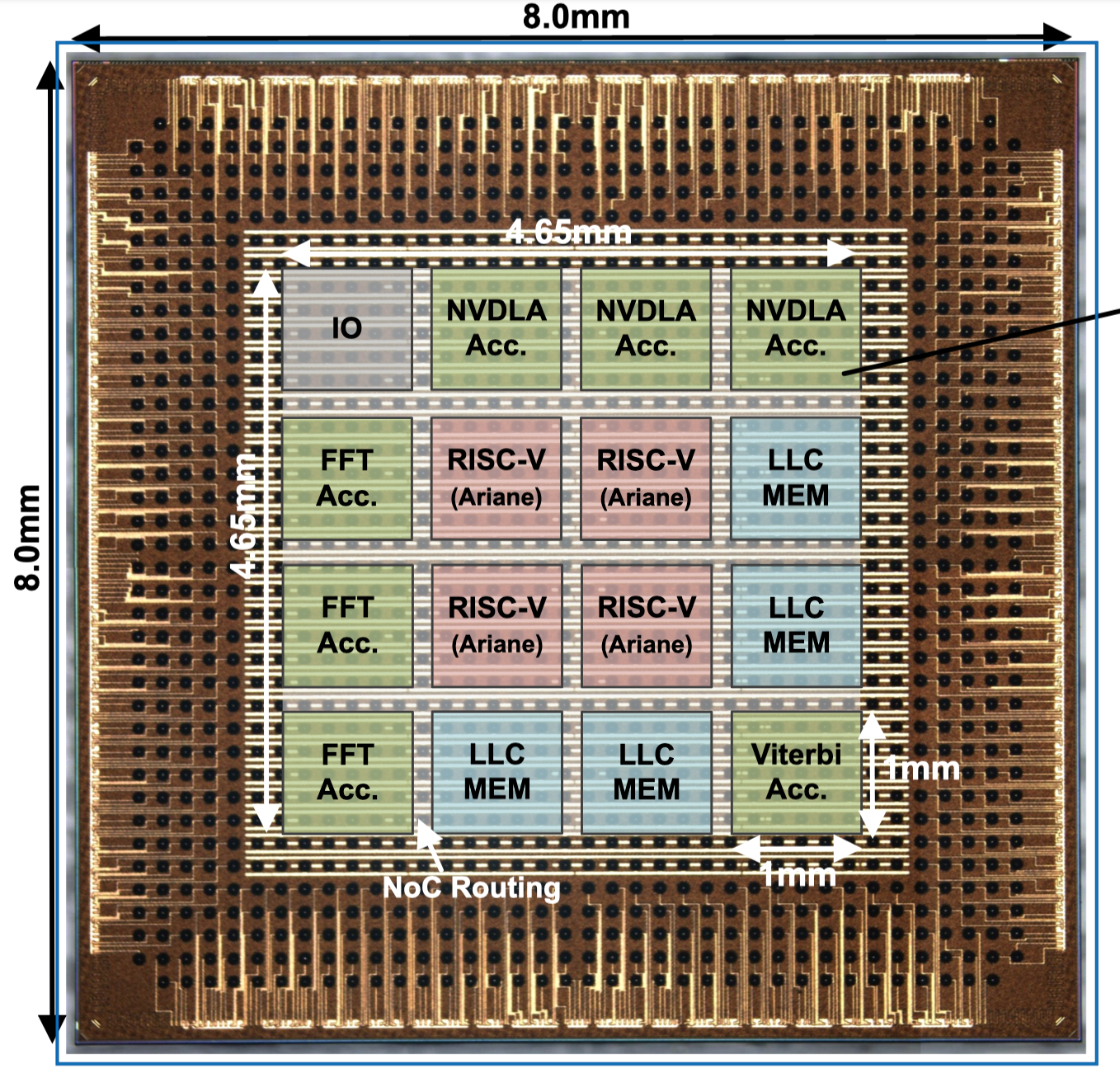
<p><img src="/images/EPOCHS0.png" alt="EPOCHS0 chip" title="EPOCHS0" height="812px" width="684px" /></p>

<p>This work is a collaboration with Harvard and IBM Research and was recently <a href="https://epapers.org/ess2022/ESR/session_view.php?PHPSESSID=183gs8c7pm0g7js6hgqq6en883&amp;session_id=35">published</a> at ESSCIRC 2022.</p>]]></content><author><name>Gabriele Tombesi</name></author><category term="ESP" /><category term="SLD" /><category term="open-source" /><category term="OSH" /><category term="open-source-hardware" /><category term="accelerators" /><category term="SoC" /><category term="RISC-V" /><category term="ESSCIRC" /><summary type="html"><![CDATA[Check out the first chip based on the ESP platform.]]></summary><media:thumbnail xmlns:media="http://search.yahoo.com/mrss/" url="https://www.esp.cs.columbia.edu/EPOCHS0.png" /><media:content medium="image" url="https://www.esp.cs.columbia.edu/EPOCHS0.png" xmlns:media="http://search.yahoo.com/mrss/" /></entry><entry><title type="html">Release 2022.1.0</title><link href="https://www.esp.cs.columbia.edu/2022/04/02/release2022-1-0/" rel="alternate" type="text/html" title="Release 2022.1.0" /><published>2022-04-02T00:00:00-04:00</published><updated>2022-04-02T00:00:00-04:00</updated><id>https://www.esp.cs.columbia.edu/2022/04/02/release2022-1-0</id><content type="html" xml:base="https://www.esp.cs.columbia.edu/2022/04/02/release2022-1-0/"><![CDATA[<p>A new GitHub Release <a href="https://github.com/sld-columbia/esp/releases/tag/2022.1.0">2022.1.0</a> of ESP is now available.</p>

<p>Check out the release notes for the complete list of new ESP features.</p>]]></content><author><name>Gabriele Tombesi</name></author><category term="ESP" /><category term="SLD" /><category term="open-source" /><category term="OSH" /><category term="open-source-hardware" /><category term="accelerators" /><category term="SoC" /><category term="RISC-V" /><category term="GitHub" /><category term="release" /><summary type="html"><![CDATA[A new GitHub Release 2022.1.0 of ESP is now available.]]></summary><media:thumbnail xmlns:media="http://search.yahoo.com/mrss/" url="https://www.esp.cs.columbia.edu/esp-logo.png" /><media:content medium="image" url="https://www.esp.cs.columbia.edu/esp-logo.png" xmlns:media="http://search.yahoo.com/mrss/" /></entry><entry><title type="html">Join OSCAR 2022 !</title><link href="https://www.esp.cs.columbia.edu/2022/02/15/oscar-workshop/" rel="alternate" type="text/html" title="Join OSCAR 2022 !" /><published>2022-02-15T00:00:00-05:00</published><updated>2022-02-15T00:00:00-05:00</updated><id>https://www.esp.cs.columbia.edu/2022/02/15/oscar-workshop</id><content type="html" xml:base="https://www.esp.cs.columbia.edu/2022/02/15/oscar-workshop/"><![CDATA[<p><a href="https://oscar-workshop.github.io/">OSCAR is the first workshop on Open-Source Computer Architecture Research.</a></p>

<p><img src="/images/columbia-oscar.png" alt="Columbia University OSCAR workshop" title="Columbia University" height="812px" width="684px" /></p>

<p>Co-located at ISCA 2022, OSCAR aims at fostering the community of researchers who are interested in developing and sharing open-source hardware and software for the design of next-generation computer architectures.
For more details and logistics, check out the workshop website available <a href="https://oscar-workshop.github.io/">here</a>.</p>]]></content><author><name>Gabriele Tombesi</name></author><category term="OSCAR" /><category term="ISCA-2022" /><category term="OSH" /><category term="open-source-hardware" /><category term="SoC" /><category term="RISC-V" /><summary type="html"><![CDATA[OSCAR is the first workshop on Open-Source Computer Architecture Research.]]></summary><media:thumbnail xmlns:media="http://search.yahoo.com/mrss/" url="https://www.esp.cs.columbia.edu/oscar.png" /><media:content medium="image" url="https://www.esp.cs.columbia.edu/oscar.png" xmlns:media="http://search.yahoo.com/mrss/" /></entry><entry><title type="html">Paper accepted at MICRO 2021</title><link href="https://www.esp.cs.columbia.edu/2021/09/14/micro2021-paper/" rel="alternate" type="text/html" title="Paper accepted at MICRO 2021" /><published>2021-09-14T00:00:00-04:00</published><updated>2021-09-14T00:00:00-04:00</updated><id>https://www.esp.cs.columbia.edu/2021/09/14/micro2021-paper</id><content type="html" xml:base="https://www.esp.cs.columbia.edu/2021/09/14/micro2021-paper/"><![CDATA[<p>Our <a href="https://sld.cs.columbia.edu/pubs/zuckerman_micro21.pdf">paper</a>
<em>“Cohmeleon: Learning-Based Orchestration of Accelerator Coherence in
Heterogeneous SoCs”</em> will be presented in October at
<a href="https://www.microarch.org/micro54/">MICRO</a> 2021.</p>

<p><em>Abstract</em>:</p>

<p>One of the most critical aspects of integrating
loosely-coupled accelerators in heterogeneous SoC architectures is
orchestrating their interactions with the memory hierarchy, especially
in terms of navigating the various cache-coherence options: from
accelerators accessing off-chip memory directly, bypassing the cache
hierarchy, to accelerators having their own private cache. By running
realsize applications on FPGA-based prototypes of many-accelerator
multi-core SoCs, we show that the best cache-coherence mode for a
given accelerator varies at runtime, depending on the accelerator’s
characteristics, the workload size, and the overall SoC status.</p>

<p>Cohmeleon applies reinforcement learning to select the best coherence
mode for each accelerator dynamically at runtime, as opposed to
statically at design time. It makes these selections adaptively, by
continuously observing the system and measuring its
performance. Cohmeleon is accelerator-agnostic,
architectureindependent, and it requires minimal hardware
support. Cohmeleon is also transparent to application programmers and
has a negligible software overhead. FPGA-based experiments show that
our runtime approach offers, on average, a 38% speedup with a 66%
reduction of off-chip memory accesses compared to state-of-the-art
design-time approaches. Moreover, it can match runtime solutions that
are manually tuned for the target architecture.</p>]]></content><author><name>Davide Giri</name></author><category term="ESP" /><category term="SLD" /><category term="open-source" /><category term="OSH" /><category term="open-source-hardware" /><category term="MICRO" /><category term="accelerators" /><category term="SoC" /><category term="RISC-V" /><category term="FPGA" /><category term="coherence" /><category term="Cohmeleon" /><summary type="html"><![CDATA[Our paper “Cohmeleon: Learning-Based Orchestration of Accelerator Coherence in Heterogeneous SoCs” will be presented in October at MICRO 2021.]]></summary><media:thumbnail xmlns:media="http://search.yahoo.com/mrss/" url="https://www.esp.cs.columbia.edu/micro2021.PNG" /><media:content medium="image" url="https://www.esp.cs.columbia.edu/micro2021.PNG" xmlns:media="http://search.yahoo.com/mrss/" /></entry><entry><title type="html">Paper published in the IEEE Micro special issue on FPGA Computing</title><link href="https://www.esp.cs.columbia.edu/2021/07/04/ieeemicro2021-paper/" rel="alternate" type="text/html" title="Paper published in the IEEE Micro special issue on FPGA Computing" /><published>2021-07-04T00:00:00-04:00</published><updated>2021-07-04T00:00:00-04:00</updated><id>https://www.esp.cs.columbia.edu/2021/07/04/ieeemicro2021-paper</id><content type="html" xml:base="https://www.esp.cs.columbia.edu/2021/07/04/ieeemicro2021-paper/"><![CDATA[<p>Our <a href="https://sld.cs.columbia.edu/pubs/giri_ieeemicro21.pdf">paper</a>
<em>“Accelerator Integration for Open-Source SoC Design”</em> has been
published in the <a href="https://ieeexplore.ieee.org/xpl/tocresult.jsp?isnumber=9472926">IEEE Micro special issue on FPGA
Computing</a>
(Jul-Aug 2021).</p>

<p><em>Abstract</em>: The open-source hardware community contributes a variety
of processors and accelerators, but combining them effectively into a
complete System-on-Chip (SoC) remains a difficult task. We present a
design flow for the seamless hardware and software integration of
accelerators into a complete SoC and for its evaluation through rapid
FPGA-based prototyping. By leveraging ESP, our open-source platform
for agile heterogeneous SoC design, we demonstrate FPGA prototypes of
various SoC designs, featuring the NVIDIA Deep Learning Accelerator
and the Ariane RISC-V 64-bit processor core.</p>]]></content><author><name>Davide Giri</name></author><category term="ESP" /><category term="SLD" /><category term="open-source" /><category term="OSH" /><category term="open-source-hardware" /><category term="IEEEMicro" /><category term="accelerators" /><category term="SoC" /><category term="RISC-V" /><category term="FPGA" /><summary type="html"><![CDATA[Our paper “Accelerator Integration for Open-Source SoC Design” has been published in the IEEE Micro special issue on FPGA Computing (Jul-Aug 2021).]]></summary><media:thumbnail xmlns:media="http://search.yahoo.com/mrss/" url="https://www.esp.cs.columbia.edu/ieeemicro2021.PNG" /><media:content medium="image" url="https://www.esp.cs.columbia.edu/ieeemicro2021.PNG" xmlns:media="http://search.yahoo.com/mrss/" /></entry></feed>